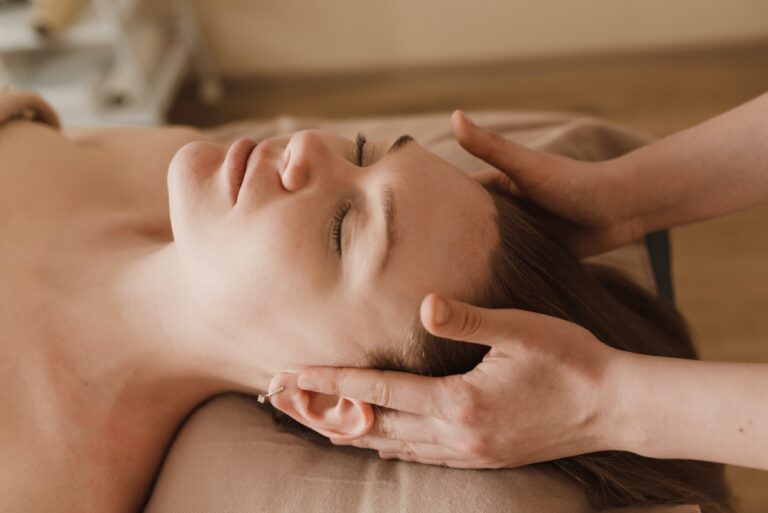

You wake up with a dull ache in your jaw. Maybe your ears feel stuffed. Your temples pound. You’ve been told you grind your teeth at night, or you’ve noticed a clicking sound every time you chew. If any of this sounds familiar, your temporomandibular joint — the TMJ — may be the culprit.
At Exhale Massage Orlando, we work with clients every day who are surprised to learn that the tension they carry in their jaw, neck, and head often traces back to one small but mighty joint. TMJ release massage is one of the most underutilized and deeply effective tools for finding real, lasting relief — and the research backs it up.

What Is the TMJ, and Why Does It Matter?
The temporomandibular joint connects your lower jaw (mandible) to your skull just in front of each ear. It’s one of the most complex joints in the human body — responsible for chewing, speaking, yawning, and even swallowing. Because it works in tandem with a dense network of muscles, nerves, and connective tissue, dysfunction here can send pain rippling outward in ways that seem completely unrelated to your jaw.
Temporomandibular disorders (TMDs) are among the three most common chronic pain conditions worldwide, alongside headache and back pain. They affect roughly 10–12% of the general population, with an estimated 10 million Americans experiencing orofacial pain at any given time. TMD is characterized by pain and limitations in jaw opening that can disrupt daily life — everything from eating and talking to sleeping and laughing.
Common Signs You May Have TMJ Dysfunction
- Jaw pain or soreness, especially in the morning
- Clicking, popping, or grating sounds when you open or close your mouth
- Difficulty fully opening your mouth
- Frequent headaches or migraines, especially at the temples
- Earaches or a feeling of fullness in the ears
- Neck and shoulder tension that doesn’t resolve with standard massage
- Teeth grinding (bruxism) during sleep or periods of stress
- Facial fatigue after eating
What the Research Says About Massage for TMJ
The science supporting massage therapy for TMJ disorders has grown substantially in recent years — and it’s compelling.
A 2023 umbrella systematic review and meta-meta-analysis published in the Journal of Clinical Medicine (Arribas-Pascual et al.) synthesized the best available evidence on physiotherapy approaches for TMD. Researchers found that manual therapy interventions — including massage — produced meaningful improvements in both pain reduction and mouth-opening ability in patients with temporomandibular disorders.
A 2022 randomized controlled trial published in Frontiers in Neurology (El-Gendy et al.) compared different massage techniques in patients with sleep bruxism — a common driver of TMJ dysfunction. The study found that deep-stripping massage produced significant improvements in jaw mobility across multiple planes of movement, including jaw opening, lateral movement, protrusion, and retraction. Participants also showed a notable increase in pressure pain threshold (PPT) across the masticatory muscles, indicating reduced sensitivity and muscle guarding.
A 2024 study published in the International Journal of Therapeutic Massage and Bodywork examined massage therapy outcomes specifically in patients diagnosed with myogenous (muscle-origin) TMD. The findings reinforced that massage is an effective component of a comprehensive treatment plan for this population.
A 2023 randomized controlled trial from the Head and Face Medicine journal (Gębska et al.) evaluated manual soft tissue therapy alongside therapeutic exercises in patients with TMJ pain and limited mobility. The study used surface electromyography to objectively measure changes in muscle activity, finding that manual therapy interventions produced measurable improvements in muscle function and pain levels.
An earlier but widely cited case study published in the Journal of Bodywork and Movement Therapies found that a combination of Western massage techniques and strain-counterstrain methods applied to the upper torso, cervical region, and oral cavity resulted in a nearly one-third increase in maximal jaw opening, a fourfold reduction in jaw clicking, and significant decreases in the intensity and frequency of TMJ-related pain — all without surgical or pharmacological intervention.
What Happens During a TMJ Release Massage?
TMJ release massage at Exhale Massage Orlando is a focused, therapeutic experience tailored to your specific pattern of tension and dysfunction. Here’s what to expect:
Assessment First Your therapist will begin with a brief intake to understand your symptoms, how long you’ve been experiencing them, and any contributing factors (stress, dental work, posture habits, etc.).
Neck, Shoulders, and Upper Back Because the jaw doesn’t function in isolation, we start by releasing the muscles of the cervical spine and upper trapezius. Tension here directly feeds into jaw dysfunction, and loosening this region creates space for deeper work.
Facial Muscles and Trigger Points Your therapist will work the masseter (the large chewing muscle along the jaw), temporalis (the fan-shaped muscle at your temple), and pterygoid muscles. Trigger points — tight, hyperirritable knots — in these areas are often responsible for referred pain that mimics headaches and earaches.
Intraoral Technique (Optional) With your consent, skilled therapists can access the medial and lateral pterygoid muscles from inside the mouth using a gloved hand. This is often the most direct route to resolving deep jaw tension and is performed with care and clear communication throughout.
Gentle Joint Mobilization Subtle traction and mobilization of the jaw may be incorporated to improve range of motion and decompress the joint.
Integration We finish with calming, integrative strokes to the scalp, face, and neck — leaving you feeling noticeably lighter and more open.
Sessions typically run 60–90 minutes, and many clients notice improvement after just one session, though a series of treatments tends to produce the most durable results.
Who Can Benefit?
TMJ release massage is appropriate for a wide range of people, including:
- Those diagnosed with TMJ disorder or TMD by a dentist or physician
- People who grind or clench their teeth (bruxism)
- Chronic headache and migraine sufferers
- Individuals with forward head posture or tech neck
- Anyone who has had recent dental work and is experiencing jaw stiffness
- People experiencing jaw pain related to stress or anxiety
- Those recovering from whiplash or neck injuries
A Note on Stress and the Jaw
The connection between psychological stress and jaw tension is well established. Many people clench their jaw unconsciously throughout the day — at their desk, in traffic, during difficult conversations. Over time, this habitual holding pattern fatigues the masticatory muscles and compresses the TMJ. Massage doesn’t just address the physical symptoms; it activates the parasympathetic nervous system, helping your body release the stress response that fuels the cycle of tension in the first place.
What to Expect After Your Session
It’s common to experience some mild soreness in the jaw and facial muscles for 24–48 hours following a TMJ release session, similar to how your body might feel after a deep tissue massage. Most clients also report:
- Greater ease of mouth opening
- Reduced jaw clicking or locking
- Decreased headache frequency and intensity
- A sense of overall relaxation and decompression
Drinking plenty of water, applying gentle warmth to the jaw, and avoiding hard or chewy foods for a day or two can support your recovery.
Ready to Give Your Jaw a Break?
If you’ve been living with jaw pain, headaches, or the relentless tension that comes with bruxism, TMJ release massage may be exactly what your body has been asking for. At Exhale Massage Orlando, our therapists are trained in the nuanced techniques required to work safely and effectively with the temporomandibular joint.
Book your TMJ release session today and take the first step toward a jaw that finally feels free.
References
Arribas-Pascual, M., et al. (2023). Effects of Physiotherapy on Pain and Mouth Opening in Temporomandibular Disorders: An Umbrella and Mapping Systematic Review with Meta-Meta-Analysis. Journal of Clinical Medicine, 12(3), 788. https://doi.org/10.3390/jcm12030788
El-Gendy, M., et al. (2022). Effects of Deep-Stripping Massage and Trigger-Point Pressure Release on Sleep Quality, Jaw Mobility, and Pressure Pain Threshold in Patients with Sleep Bruxism. Frontiers in Neurology. https://doi.org/10.3389/fneur.2022.1041928
Gębska, M., Dalewski, B., Pałka, Ł., et al. (2023). Evaluation of the efficacy of manual soft tissue therapy and therapeutic exercises in patients with pain and limited mobility TMJ: a randomized control trial. Head & Face Medicine, 19, 42. https://doi.org/10.1186/s13005-023-00385-y
Bagherimalamiri, N., & Orakifar, N. (2024). The Relationships Between Psychosocial Factors and Short-Term Treatment Outcomes of Massage Therapy in Patients with Myogenic Temporomandibular Disorders. International Journal of Therapeutic Massage and Bodywork, 17(3), 5–14. https://doi.org/10.3822/ijtmb.v17i3.1015
Journal of Bodywork and Movement Therapies — Case Study: Massage therapy decreases frequency and intensity of symptoms related to temporomandibular joint syndrome.